When to Start Preschool: A Guide for Utah County Parents
Few parenting decisions feel as weighty as choosing when and where to send your child to preschool for the first time. Parents in Utah County ask the same questions every spring and summer as enrollment season approaches: Is my child ready? Am I starting too early? What if I wait too long?
The honest answer is that readiness is far less mysterious than it seems. With the right information and a clear picture of what to look for, this decision becomes much more navigable.
At Kids Village™, we've been guiding Utah County families through this conversation since 2003. As a private preschool in Orem, Utah serving children ages 2½ through 2nd grade, we've watched thousands of children take their first steps into a learning environment and seen firsthand how the right start at the right time can shape a child's entire relationship with school. What follows is a practical, experience-grounded guide to help you make this decision with confidence.
Voted Best Preschool in Utah County, 2016–2026 [VERIFY-LOW: confirm award years remain current], Kids Village has been serving families throughout Utah County since 2003 — at our private preschool in Orem, Utah. We're also proud to have been Voted Best Private Preschool in Utah, 2015–2026 [VERIFY-LOW: confirm award years remain current]. These recognitions reflect two decades of families who trusted us with their children's earliest learning experiences.
What Age Should My Child Start Preschool?
Most child development experts agree that children become developmentally ready for a structured early learning environment somewhere between ages 2½ and 4. That range exists for good reason: children develop at genuinely different rates, and chronological age alone tells only part of the story.
In Utah, kindergarten is compulsory the year a child turns 6, which means families have real flexibility in how they approach the preschool years. Many Utah County families choose to begin at 2½ or 3 precisely to take advantage of the early developmental window when language acquisition, social development, and foundational cognitive skills are forming at their fastest pace. Research consistently shows that children who enter kindergarten with a strong early learning foundation arrive ahead of peers who did not attend preschool — not just academically, but socially and emotionally as well.
Ages 2½ to 3: The Gentle Introduction
Children at this stage benefit most from sensory-rich, play-centered environments where language and social engagement happen naturally rather than through formal instruction. Two-day-per-week programs are typically the right pace. At Kids Village, this is the world of Little Sprouts and Sweet Peas, with programs designed specifically for the youngest learners, where the goal is not academic output but a child's first warm, confident experience of learning alongside others.
Kids Village's earliest program welcomes children at age 2½ into a nurturing, sensory-rich environment where the focus is on warmth, confidence, and a child's very first experience of learning alongside peers.
Learn more about the Little Sprouts programAges 3 to 4: Curiosity Takes Over
By age 3, most children are ready for more structured learning experiences, longer sessions, and broader social interaction. This is when curiosity explodes. Three- and five-day programs become realistic and productive options for children who have the social and emotional foundation to handle them. Children at this age are genuinely hungry to learn, and the right environment channels that energy into skills that matter.
The Sweet Peas program meets growing curiosity with structured, joyful learning through five-senses exploration, peer interaction, and foundational academic activities designed for three-year-olds in Orem and across Utah County.
Learn more about Sweet Peas preschoolAges 4 to 5: Building Kindergarten Readiness
Pre-K readiness becomes the central focus in this window. Children are actively developing executive function, vocabulary, early literacy, and the social skills they will need for a successful kindergarten transition. At Kids Village, this is the Tater Tots stage — a year of intentional preparation that consistently sends our graduates into kindergarten well ahead of grade-level expectations.
The Tater Tots pre-K program is a year of intentional preparation for kindergarten, blending Saxon curriculum-based academics with the full range of Kids Village workshops. Graduates consistently enter public and private kindergartens across Utah County ahead of grade-level peers.
Learn more about the Tater Tots pre-K programSigns Your Child is Ready for Preschool
ties that tend to appear together when a child is approaching the right developmental window. You're looking for most of these signals, not every single one.
Social and Emotional Readiness
Your child shows genuine interest in other children and wants to play near or with peers. They can tolerate brief separations from you without prolonged distress. They are beginning to express emotions with words (even simple ones like "mad," "sad," or "happy") and can follow a simple two-step direction such as "put your shoes on and come to the door." None of these need to be perfect or consistent. Emerging is enough.
Physical Readiness
Your child can manage basic self-care tasks like washing hands, putting on a jacket, and carrying a bag. They have the stamina for a structured half-day program without becoming completely overwhelmed.
Cognitive and Language Readiness
Your child shows curiosity about books, pictures, colors, and numbers. They speak in simple sentences and can make their basic needs understood. They can focus on a single activity for at least five to ten minutes without constant redirection.
If your child checks most of these boxes, the developmental window is likely open. Starting in the right environment sooner rather than later tends to serve children well.
Signs Your Child May Benefit From Waiting
Readiness conversations go both ways, and we would be doing Utah County parents a disservice if we only talked about green lights. Some children simply need more time, and there is no shame in that. In fact, the founding story of Kids Village is rooted in exactly this truth.
Our founder, Ann Whittaker, built this school after watching her own son, labeled "developmentally delayed," struggle in an environment that could not see his gifts. That experience shaped everything about how Kids Village approaches children who are still finding their footing. It is the reason we believe deeply that an imperfect fit between a child and their first school experience can do more harm than a delayed start.
Watch for these signals that a child may benefit from a gentler entry or a few more months at home:
- Separation anxiety that is severe and persistent rather than just first-day nerves
- Very limited verbal communication that makes basic interaction with peers difficult
- Difficulty with any transition, even small ones at home
- Consistent discomfort in group settings including family gatherings or playgrounds
None of these signals means your child is not ready for preschool ever. They often mean your child needs a smaller, more individualized environment rather than a delay. Many Utah Valley families find that a two-day-per-week program at age 2½ eases the transition beautifully, even for children who are initially very hesitant.
Why the School Environment Matters as Much as Age
Timing is only half of the readiness equation. The environment your child enters matters just as much as when they enter it.
A large, impersonal classroom where a child feels invisible can set back even a child who was developmentally ready. A warm, structured, and genuinely stimulating environment can accelerate a child who seemed borderline ready by six months. This is why Orem families who are on the fence about timing often find that a school visit resolves the question faster than any checklist.
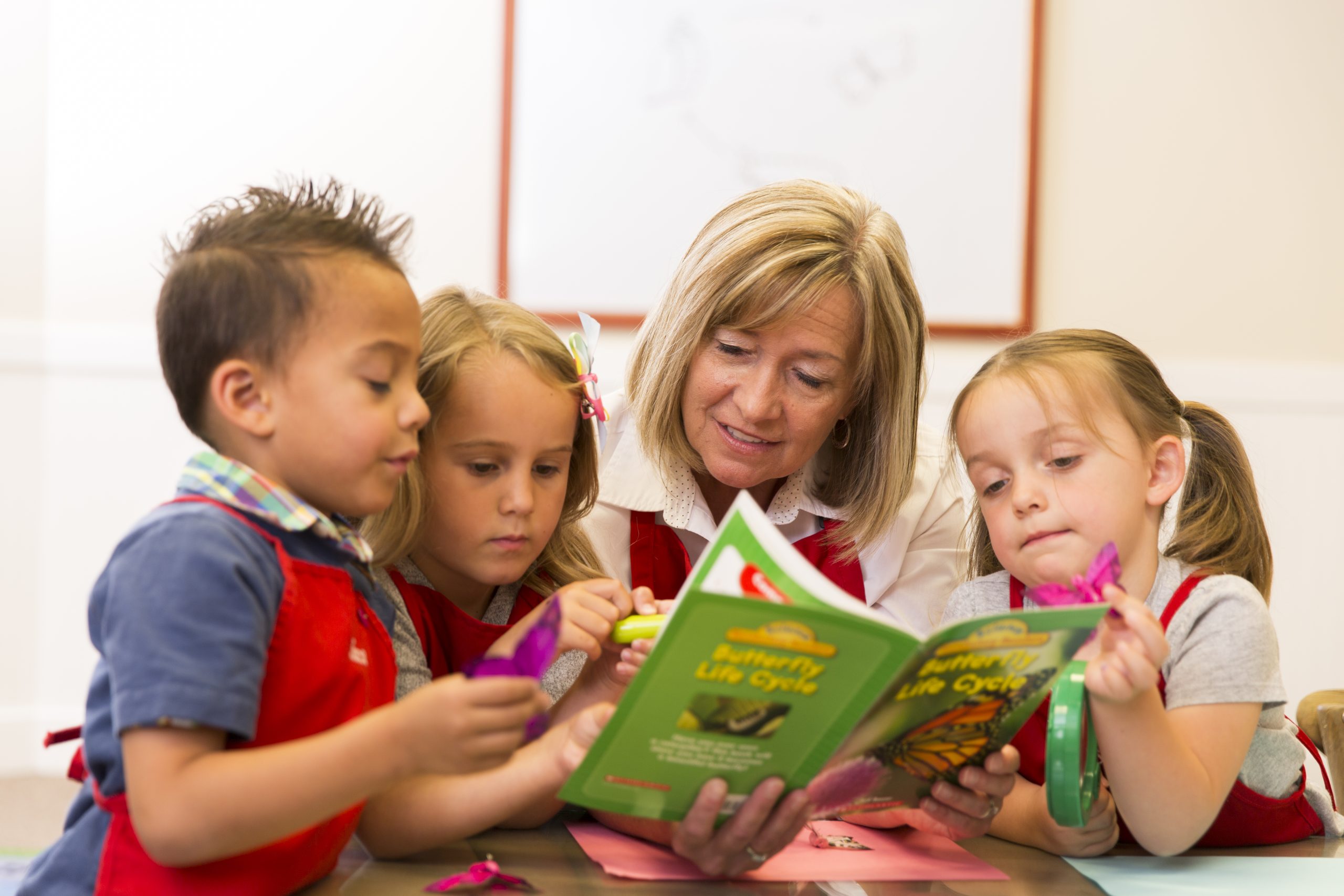
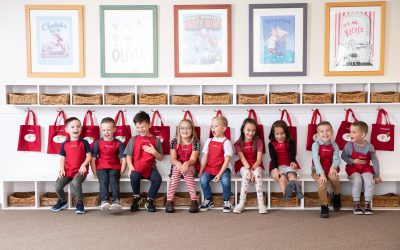
Kids Village was built from the ground up to feel safe, magical, and deeply personal. Children walk into a storybook village with cobblestone paths, a life-sized oak tree at the center of town, cottage-style classroom storefronts, and warm twinkle lights overhead. Every child receives a personalized book bag and a red apron embroidered with their name on their first day. These are not decorative details. They are deliberate signals to a young child that this place was made for them.
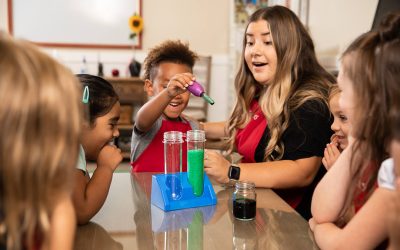
Inside, children move through up to 8 workshops [VERIFY-MEDIUM: confirm current number of daily workshops], including a professional-grade kitchen for cooking, an engaging science workshop, art studio, music and drama room, computer lab, and more. Learning happens through all five senses: touching, tasting, seeing, hearing, and doing. This five-senses learning methodology is especially well suited to children who are active, curious, or who do not thrive in passive, sit-and-listen formats.
The academic foundation rests on the Saxon curriculum, a nationally recognized program consistently rated among the top three early learning approaches for more than 30 years. Children who graduate from Kids Village regularly enter kindergarten and public school ahead of grade-level peers. Voted Best Preschool in Utah County, 2016–2026 and Voted Best Private Preschool in Utah, 2015–2026, Kids Village has maintained full enrollment since 2008, with most new families joining by referral from current or former families.
What Utah County Parents Should Ask When Choosing a Preschool
Once you've determined your child is approaching readiness, the next step is evaluating your options carefully. The questions that matter most are not about tuition rates or location. They are about fit.
Does the environment match my child's temperament?
A child who is sensitive or easily overstimulated needs a calm, structured setting. A child who is energetic and social needs room to move and interact. No amount of reading about a school substitutes for a visit. Walk through the space during a school day and watch how children and teachers interact.
What does the daily structure look like?
Variety and predictability are not opposites in a well-designed preschool program. Children thrive on routine but disengage from monotony. Ask how many different activities a child experiences in a typical day and how transitions between them are handled. Programs where children are doing the same thing for long stretches are missing what early childhood development research tells us about how young children actually learn.
How does the school handle the transition period?
Every experienced preschool has a thoughtful, practiced plan for helping children separate from parents. Ask specifically what the first two weeks look like, what support teachers provide, and how the school communicates with you during that period. Vague answers are a yellow flag.
What is the academic approach, and where do children go after?
If you want your child prepared for kindergarten and beyond, ask about curriculum, measurable outcomes, and where alumni students typically land. At Kids Village, the consistent answer is that our graduates enter public and private schools across Utah County noticeably ahead of their peers.
Does the school treat parents as partners?
You should feel like an informed participant in your child's experience, not an outsider. Ask how teachers communicate progress, concerns, and daily highlights. The answer tells you a great deal about the school's philosophy toward families.
When you're ready to see the difference a truly exceptional private preschool makes, we would love to show you around. Schedule a tour at Kids Village and experience the storybook village for yourself. You can also explore our programs to find the right fit for your child's age and schedule.
Frequently Asked Questions
What is the right age to start preschool for a child in Utah County?
Most early childhood educators recommend beginning preschool between ages 2½ and 4, depending on your child's social, emotional, and language development. In Utah, kindergarten is compulsory at age 6, which gives families meaningful flexibility in how they structure the preschool years. Children in Utah County who begin preschool at 2½ or 3 in a nurturing, structured environment consistently enter kindergarten with stronger vocabulary, social skills, and early literacy foundations than peers who did not attend preschool.
That said, every child is different, and a brief conversation with an experienced educator can help you read your child's readiness more clearly. Visit our Utah County preschool page for more detail on age-based program options.
What makes Kids Village different from other Utah County preschools?
Kids Village offers something genuinely unlike any other option for Orem and Utah Valley families: a storybook village learning environment with cobblestone paths, a life-sized oak tree, themed workshop classrooms, and a curriculum that engages all five senses every single day. Children move through 8 workshops covering not just reading and math but cooking, science, music, drama, art, foreign language, and more.
The academic backbone is the Saxon curriculum, nationally rated in the top three early learning programs for more than 30 years. Kids Village has been voted Best Preschool in Utah County, 2016–2026 and Voted Best Private Preschool in Utah, 2015–2026. Most families join by referral, and enrollment has been filled every year since 2008. To see the difference in person, schedule a tour.
"Children move through 8 workshops — far more variety than a typical Utah County preschool — covering reading, math, cooking, science, music, drama, art, foreign language, and more. Every day in the village is genuinely different."
My child has a speech delay or developmental concern. Should I wait to start preschool?
In many cases, the answer is no. Waiting is not always the right choice for children with speech delays or developmental differences. Early, structured language exposure in a nurturing environment can actively support development rather than strain it.
The founding story of Kids Village speaks directly to this: our founder built this school after her own son, who had been labeled "developmentally delayed," was placed in an environment that could not meet his needs. That experience is the reason Kids Village is built around individualized attention, multi-sensory learning, and the conviction that every child has gifts waiting to be discovered.
How do I know if my child is emotionally ready for preschool?
Emotional readiness does not require perfection. It requires a few key building blocks:
- The ability to tolerate brief separation without sustained distress
- Some interest in other children
- The ability to express basic needs verbally
- The capacity to follow simple directions
Children who are not yet consistent in all of these areas are not necessarily unready. They may simply need a smaller class size, a gentler start such as two days per week, and an environment where teachers know their name and personality from day one.
At Kids Village, every child receives a personalized book bag and a red apron embroidered with their name before they ever walk through the door. That level of personal attention makes a real difference for children navigating their first big step away from home. Explore our programs to find the schedule and age group that fits your child best.
About the Author

Mikelle Despain
Author at Kids Village
Mikelle Despain has contributed expert articles on early childhood education to Kids Village for over a decade. With a background in child care and child development, as well as firsthand experience as a mother of four, she offers thoughtful, family-centered insight to help support parents and young learners.
You may also be interested in...

Age-Appropriate Garden Chores for Young Children
Spring is (nearly) upon us, which means planting season is just around the corner! Involving your child in growing a vegetable garden provides many emotional, educational, and physical benefits to the child, regardless of age! Young babies can benefit from sensory...
8 Reasons Why It’s Important for Children to Help in the Garden
Encouraging your child to help you in the garden doesn’t only get them outside; it also extends their attention span, teaches them delayed gratification, and more.

Presidents Day for Kids
As far as holidays go, Presidents Day isn't one that springs to mind as a "kids holiday," especially right after a candy-filled Valentine's Day. However, it's an important holiday in our history, and with a little creativity, it can be fun for your children! What is...

Strengthening Pre-Writing Skills at Home
Many of our parents ask what they can do at home to help their children excel at school, and our answer is almost always to READ! Reading is so, so important for students. Reading with your child not only helps to develop their language skills, but it also helps...

4 Things You Might Have Missed During Your Kids Village Tour
At Kids Village, we invite prospective families to come to our school for a tour at any time (you don't even have to give us notice if you come during school hours). We think it's important for parents and children to see classrooms and workshops in action as part of...
12 Ideas for Keeping Children Occupied on Thanksgiving
We don't know about you, but Thanksgiving can be...well...a little chaotic at our houses, especially with so many little ones in the mix. while it can be tempting to turn on a movie marathon and settle the kids onto beanbag chairs with a little Chex mix (no judgment...
Helping Your Child Transition Into Preschool
Transitioning into preschool can be scary for the parent, but it can be especially cumbersome for young children. They haven’t been exposed to many new things before, and you, as their parent, have been such a consistent presence in their life that it may be difficult...
How to Teach Kids to Share
Any time there is more than one child in the room, there’s likely to be some tension over some knick-knack or other. Kids under the age of 5 are just starting to develop their sense of self. They’re starting to explore and experiment with what that means for them and...

4 Ways to Enhance Your Child’s Ability to Focus
Being able to focus helps increase productivity, reduce stress, and helps you produce a better quality of work. When you are able to pay attention to just the task at hand, you’re able to dedicate your whole self to whatever it is you’re doing. Cultivating mindfulness...
How to Raise Self-Motivated Children
Raising kids who have the wherewithal to work past challenges and persevere can be a fine line to walk. You don’t want to be overbearing and force your kids to succeed; that’s a miserable and exhausting experience for both of you. It’s a balancing act: giving your...
5 Life Skills to Start Teaching Now
Parents have a lot of responsibility. We have to address our children’s immediate needs: feeding them (which sometimes feels nonstop), clothing them, and educating them. Outside of conventional education like learning the ABCs, multiplication tables, and the formula...
Six Toddler Friendly Science Experiments
Six Toddler-Friendly Science Experiments Cultivating your toddler’s interest in science may seem a bit overwhelming. They don’t have a lengthy attention span. Their limited interactions mean that there’s not much foundational knowledge from which to build, but that...