Cooking is not only a fun activity to do with your child; it’s also an important life skill for them to learn! You’ve probably already started letting your child help with things like stirring and pouring, but at what ages can you start adding additional skills? Below, we break down age-by-age tasks that your child can practice to learn how to cook.
Age-Appropriate Kitchen Skills for 2-3 Years
Your child is ready and eager to start playing along with you in the kitchen! Begin introducing them to simple one-step tasks conducive to their strength and motor coordination.
- Sensory Play. Let them taste, touch, and smell the ingredients you’re cooking.
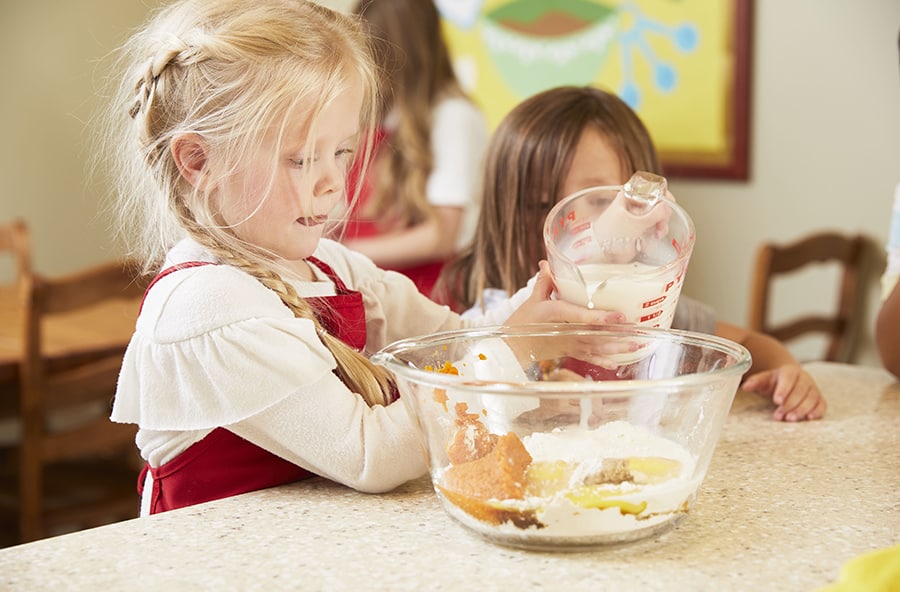
- Pouring. Help them pour ingredients into bowls.
- Stirring. You can also help them gently stir dry ingredients or thin liquids.
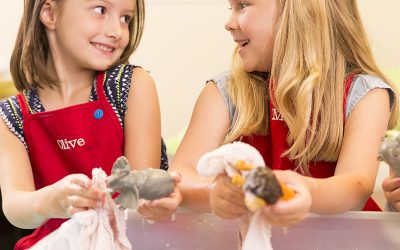
- Wash Produce. Toddlers love water. Let them wash produce (just prepare for splashes).
Age-Appropriate Kitchen Skills for 3-5 Years
Your child is old enough now to take on some responsibility! Their motor coordination and strength are improving, as is their eagerness to help and contribute.
- Cutting Soft Fruits & Veggies. Introduce your child to knife skills and safety by letting them practice cutting soft fruits and vegetables (such as strawberries, bananas, steamed broccoli florets, baked potatoes, etc.) with a plastic knife or butter knife.
- Spreading. Help your child master spreading skills such as peanut butter on bread, hummus on english muffins, softened cream cheese on bagels, or softened butter on toast.
- Make a Smoothie. Help your child make themselves a smoothie by pouring the ingredients into the blender and pushing the button!
- Wash Plastic Dishes. Time for more water play! Set up your child safely at the sink with a brush, bubbles, and plastic dishes so they can practice their dishwashing skills.
Age-Appropriate Kitchen Skills for 6-8 Years
Your child is ready to amp up their skills in the kitchen–and may even be ready to add a little heat!
- Measuring. Your little chef is ready to start measuring with help!
- Cracking Eggs. Help your child practice cracking eggs–just be sure to practice into a clear, empty bowl before pouring into your recipe so you can fish out egg shells if needed.
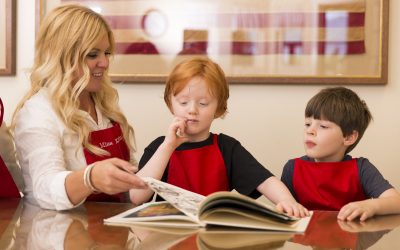
- Read Recipe Steps. Your little reader is ready to take the helm! Put them in charge of reading and finding ingredients, then ask them to read each recipe step aloud so you can complete it together.
- Using a Paring Knife. If your child has had plenty of practice with a plastic or butter knife, they may be ready to graduate to using a small paring knife. At this age, it’s still best to stick with soft fruits and vegetables while they hone their knife safety skills.
- Peeling Vegetables. Help your child learn to peel vegetables. Make sure to be very clear about which side of the peeler is sharp, how to hold the vegetable, which direction to peel it, and how to adjust their hold to get every part of the veggie. Peelers can be confusing to use the first few times, and their instinct will be to grab it and go as fast as they see mommy or daddy use the peeler.
- Knead & Shape Dough. With spot-on motor coordination and increasing strength, your little one is ready to knead and shape dough! Keep in mind that the final outcome won’t be as pretty and perfect as if it were done by an adult, but that the sacrifice is worth it to help your child learn this important skill.
- Stir Non-Splatter Foods. Your child may be ready to add a little heat and stove safety to their repertoire–use your best judgment! Make sure to start with low and med-low heats with foods you’re sure won’t splatter or spit. Talk to your child about stove safety–keeping handles pointed away from themselves so they won’t run into them, making sure handles don’t sit over other burners where they’ll get hot, and making sure to have a heat-proof spoon or spatula that won’t heat up when it touches the pan. A good place to start is with scrambled eggs cooked over low heat!
Age-Appropriate Kitchen Skills for 8-12 Years
Now your child is ready to perfect many of their kitchen skills and to develop confidence and independence in the kitchen! Now is a great time to give them more responsibilities such as making their own lunches and making a simple meal or two.
- Make Own Lunch. Let your child practice making their own sandwiches, tossing veggies with noodles and meat for a pasta salad, or making a quesadilla with leftover chicken and vegetables. This is a good time to talk about nutrition and the importance of having veggies, whole grains, and a protein option in their lunch for a well-balanced meal.
- Simple Recipes. Now is a good time to pick up a kids cookbook with simple recipes your child can work out on their own. Now that they can read and know the basics of measuring, stirring, pouring, and stove use, they can start practicing those skills. Younger children may still need some help and confidence getting food in and out of the oven, especially with heavier pans, so make sure you are on hand as their support staff.
- Knife Skils. Your child is probably ready to start using a bigger knife and to begin chopping harder foods such as carrots and celery. Teach knife skills slowly, and make sure you’re on hand to remind them to keep their fingers curled and go slowly.
- Raw Meat. Your child should have a good handle on food safety, so they may be ready to start working with raw meat. Let them help you bread chicken fingers, shape hamburger patties, or season steaks. Reinforce proper handwashing and talk to them about cross contamination and the importance of keeping surfaces, hands, and utensils clean.
- Wash & Dry Dishes. Now that knife safety is being practiced, your child is probably ready to start helping you wash, dry, and put away dishes.
- Put Away Groceries. Your child is more confident and comfortable around the kitchen! Let them help you unload and put away groceries. This will also help them get the hang of where you keep different ingredients in the kitchen!
As always, children learn not only by doing, but from watching as well. Set an example in the kitchen by cooking healthy, fresh meals. Narrate what you’re doing so your child can learn terms such as “chop,” “dice,” and even “braise” or “baste.” Your child will surprise you by what they pick up!