For parents, teaching solo play to children is a necessity—there are chores to do! For toddlers, however, solo play takes some getting used to.
Toddlers naturally want to do everything with their parents and often get upset when they’re not included. Because of this, parents can easily spend their entire day as playmate instead of adult, leading to feelings of burned out frustration as the mountain of important to-dos grows.
The ability to teach and practice solo play not only frees up some of the parent’s time to take care of those important to-dos, but—more importantly—solo play helps your child develop and practice crucial skills.
The Importance of Solo Play
Stephanie Gillingham, program coordinator and professor of early childhood education at Sheridan College in Oakville, Ontario says, “What they’re [toddlers] gaining when they’re playing on their own is curiosity, autonomy, learning to take initiative and problem-solving.”
Melanie Killen, Ph.D., associate director of the Center for Children, Relationships and Culture at the University of Maryland, explains, “Playing alone is good for a child—for his self-esteem, his imagination, and his ability to make it in the wider world, where Mom or Dad won’t come running to amuse him every time he’s bored.”
Your Toddler, the Scientist
For adults, the results of solo play often looks like one giant mess to clean: playdough scattered around the kitchen, drawers turned inside out, toilet paper torn to shreds. But what we call “messes” or even “play” toddlers would call “learning on our own terms.” This learning isn’t done through memorizing facts or watching educational programs, but through sight, taste, smell, sound, and touch.
Your Self-Reliant Toddler
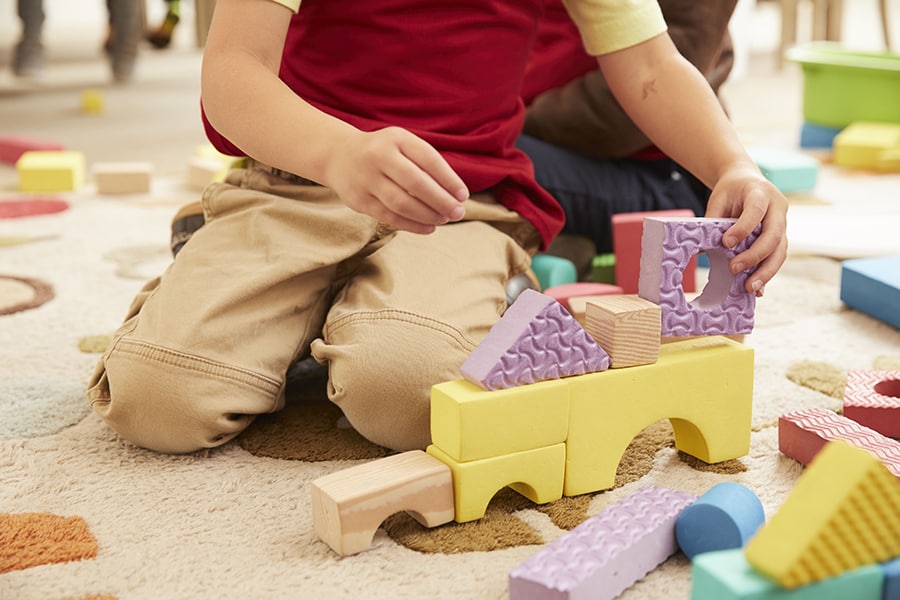
An inevitable part of solo play is learning to think critically and complete tasks without adult intervention. Your toddler or preschooler will develop problem-solving skills as he tackles riddles such as how to build a better block foundation to build the tower higher, how to open the (hopefully washable) markers to write a love note to mommy, or how to get off the couch while holding an armful of toys.
Your child’s confidence and self-reliance as he accomplishes things himself, helping him learn to better trust in his ability to cope and succeed. He will learn that his happiness doesn’t depend on entertainment or attention from others but that he determines his own happiness.
Don’t Insist on Coming to the Rescue
While you should always be on the lookout for dangerous situations, it’s important to quell your instinct to step in and “help” when you see your child struggling during solo play. Remember, these struggles and challenges are helping your child develop important problem-solving skills in the future. More importantly, however, you stepping in to solve the problem signals to your child that you don’t believe they can solve the problem on their own, which can signal to them that they’re incapable or inadequate to problem solve without you.
Instead, if you see your child struggling, wait and see what happens. They might just surprise you with some creative ingenuity! If they seem like they’re reaching their breaking point, instead of jumping in with, “Here, let me help,” and doing it for them, instead offer, “I’m here to help if you ever need me.” This puts the decision of asking for help in their hands, helping them maintain their autonomy.
If your child does ask for help, instead of solving the problem for them, help to grow their problem-solving skills. Try something like, “Hmmm… I see you’ve tried it this way a few times and it doesn’t seem to be working… Is there a different way you could try doing it?” If they’re having trouble identifying a second solution, try giving them a hint. “Hmmm… It looks like you’re trying to build the tower high, but it keeps toppling over. I wonder if there’s something you can try to make it stronger and thicker so it won’t topple over so easily…” This helps encourage problem-solving on their own, while also modeling the types of thought processes that will help them in the future.
Reprogram Your Toddler’s “Alarm System”
You’ll notice that babies often sound an alarm when left alone for more than a couple moments or when their mother is too far away. This natural programming makes sense in such defenseless little ones. However, when that little one becomes a toddler, it will take practice to “reprogram” that instinct.
It can help to start slow, creating short, simple periods of play to start out, that are more likely to result in a positive outcome. Start with 5-10 minutes at a time with you nearby. Keep the playtime short so your child doesn’t feel bored, anxious, or ask to stop, otherwise this may create a pattern of disliking solo play. After a few successful runs spread over a few days, try stepping out for a moment or two while your child plays—not too long, or your child will come looking for you which will reinforce a pattern of seeking you out every time you leave the room. Instead, come back before they complete the thought process to come looking for you, and verbally reinforce their play. “It looks like you’re working hard on drawing that unicorn! I love the colors you’re using!” This will help immediately reconnect you to your child, while positively reinforcing solo play. As your child has positive experiences with solo play, slowlyincrease the play time and your distance from them as they play (of course, always stay within a safe range in case of emergency).
Solo Play Ideas
If you’re struggling to come up with easy, engaging solo play ideas, many parenting sites have ideas. However, you shouldn’t always feel like you have to make a suggestion or set something up for your child to play. Letting them look around and make a decision about how to spend their time is also an important practice.
For solo play activities, check out this article on smartparenting.com