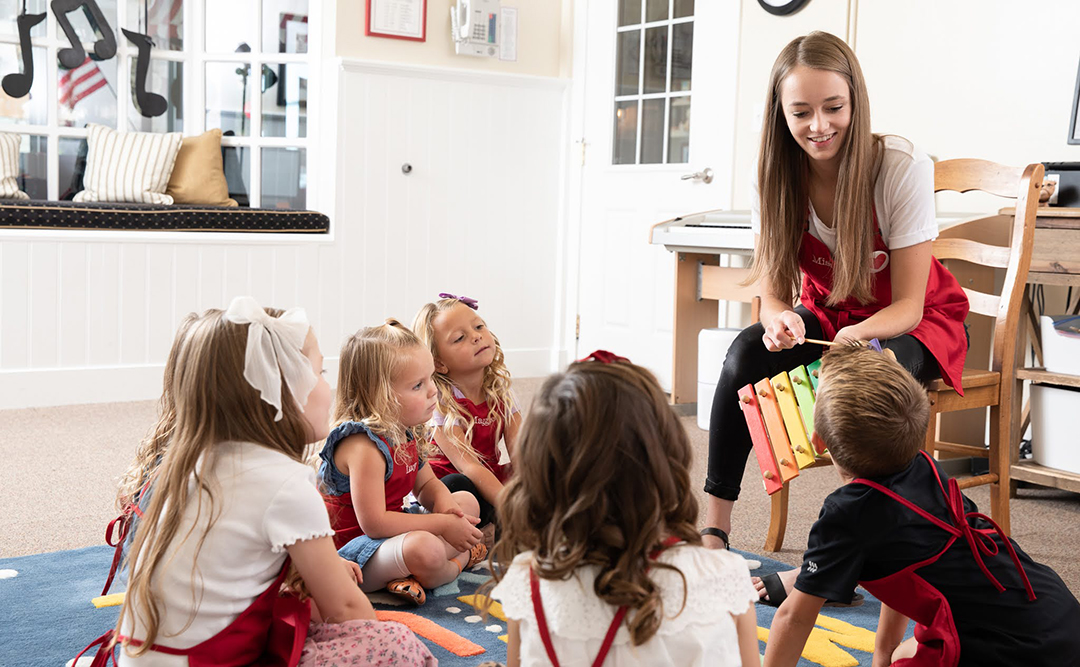
Choosing a preschool is a big decision. When you tour a school, you are not just looking at a classroom or checking a box on your to-do list; you are trying to picture your child there every day — learning, making friends, building confidence, and feeling safe and supported.
If you are visiting private preschools in Orem or anywhere in Utah County, asking the right questions during your tour can help you look beyond appearances and get a clearer picture of how a school actually works day to day. A clean and beautiful space can be easy to discern, but it’s the teaching approach, teacher training, communication, safety procedures, and the way children are treated that matter most.
Before you schedule a tour, it helps to know which questions will tell you the most about a school’s curriculum, culture, safety procedures, and kindergarten-readiness approach. Below are some of the most important questions to ask on a preschool tour that will help you get a better feel for whether the school aligns with your goals for your child, along with why each one matters.
1. What does a typical school day look like?
Ask the school to walk you through a normal day from arrival to pickup.
You want to understand how time is structured, how much of the day is hands-on versus teacher-led, how transitions are handled, and whether the rhythm of the day feels calm, engaging, and age-appropriate. A strong preschool should be able to clearly explain what children do throughout the day and why those activities matter.Before you schedule a tour, it helps to know which questions will tell you the most about a school’s curriculum, culture, safety procedures, and kindergarten-readiness approach.
This question can also help you picture how your child may adjust to the new routine.
2. What is your approach to early childhood learning?
Every school has its own philosophy and priorities. Some focus more heavily on academics, some lean more play-based, and others work to balance structured learning with creativity, movement, and social-emotional growth.
Ask how the school approaches reading readiness, early math, hands-on learning, creativity, and life skills. Try to look beyond buzzwords for a clear explanation of how children learn in that environment. If the person providing the tour answers without the detail you’re looking for, don’t be afraid to speak up!
3. How do you help children adjust when they are nervous or upset?
Starting preschool is a major transition for many children. Some feel excited right away, while others need time to build trust and confidence.
Ask how teachers respond when a child is crying, missing a parent, struggling with separation, or simply having a hard day. Their answer will tell you a lot about the emotional tone of the school and whether children are treated with patience, warmth, and consistency.
4. How do you handle behavior challenges?
It is important to know how a school responds when children hit, bite, struggle with transitions, or have conflict with peers.
Look for an answer that reflects consistency, age-appropriate expectations, and respectful guidance. You want to understand how the school teaches children to regulate emotions, solve problems, and interact well with others — not just how they react when something goes wrong.
5. What does your curriculum include?
When you’re asking about the curriculum during your preschool tour, keep in mind that preschool should support the whole child. Ask what children are learning academically, socially, emotionally, and creatively.
This is a good time to ask about pre-reading skills, phonics, math foundations, fine motor development, social development, music, art, movement, and any enrichment opportunities the school offers. A strong answer should help you understand how the program prepares children not only for kindergarten, but for a positive relationship with learning.
This is also where you get to decide your opinion on Common Core. For preschools in Utah County, charter schools and public schools are required to follow Common Core, while private schools can choose a different standard of learning. Some parents find themselves aligned with these standards while others prefer a different approach.
6. How much time do children spend in active play or outdoor play?
Young children need movement. Outdoor play, imaginative play, and physical activity not only help children balance energy, they also help children build coordination, confidence, social skills, and self-regulation.
Ask how often children go outside or to an active play environment, what active or outdoor play looks like, and how the school balances active play with classroom learning.
7. What is your student-to-teacher ratio?
This is one of the most practical questions you can ask when evaluating a preschool for your child. Especially for young students that are newly entering the school environment, more one-on-one attention helps them work through speed bumps they wouldn’t otherwise know how to communicate.
Smaller ratios often allow for more support, more individual attention, and stronger relationships between teachers and children. Ask about class size, the number of adults in the room, and how support changes by age group or program.
8. What training and experience do your teachers have?
Your child’s teachers matter tremendously. Ask about teacher experience, early childhood education backgrounds, ongoing training, CPR and first aid certification, and how the school supports teacher development.
You can also ask how long teachers typically stay. Strong retention often signals a healthy school culture, and consistency can be especially meaningful for young children.
9. How do you communicate with parents?
Good schools view parents as partners.
Ask how often you will hear from teachers, whether communication happens daily or weekly, how concerns are handled, and how families are updated about progress, behavior, and important school information. You want to know what communication looks like in real life, not just in theory.
10. How do you integrate technology into your lessons?
Consider the amount of technology you’d like your child to be exposed to during their early learning experiences, and be sure to ask about it during your preschool tour.
Some schools use technology briefly to support lessons (for instance, a science video showing the process from caterpillar to chrysalis, to butterfly), while others may integrate tablet learning into daily routines. Based on your viewpoint of technology, this question will help you learn if the preschool is aligned with your goals.
11. What do you do if a child isn’t willing to participate?
As a parent, you know that some days your child is ready for anything, while other days they’d prefer to sit back and watch. This question can help you understand how your child will be treated on their “off” days. Look for patience, consistency, and care in the answer.
12. What safety and security procedures do you have in place?
When you tour a preschool, ask specific questions about safety instead of assuming every school handles it the same way.
Ask about building access, visitor procedures, drop-off and pickup policies, emergency drills, classroom supervision, and how the school keeps children secure throughout the day. This question often reveals how thoughtfully a school operates behind the scenes.
13. What happens if a child gets sick during the day?
Health policies are worth discussing before you enroll.
During your preschool tour, ask how the school handles illness, when parents are contacted, what symptoms require pickup, and what the expectations are for returning to class. You can also ask about handwashing, classroom cleaning, and general hygiene procedures.
14. How do you support kindergarten readiness?
Even if your child is still young, it is helpful to understand how the school thinks about long-term growth.
Ask what skills children are expected to build before kindergarten and how the program helps them develop academically, socially, and emotionally over time. This is especially useful when comparing schools that may sound similar on the surface but differ in how intentionally they prepare children for the next stage.
15. What makes your school different from other preschools?
This question gives the school an opportunity to explain its strengths in its own words.
Listen for specifics. Strong answers may include teaching philosophy, school culture, enrichment opportunities, the learning environment, staff quality, communication style, or the way children are known and cared for as individuals. Generic answers are less helpful than thoughtful, concrete ones.
16. Can I see the classrooms and learning spaces in action?
If your preschool tour happens during school hours, ask to observe the environment instead of relying only on descriptions.
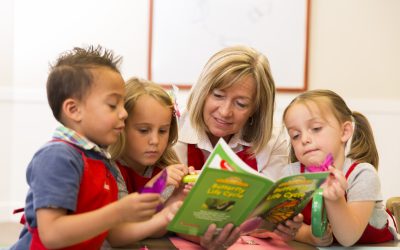
Notice whether the classrooms feel calm, welcoming, and organized. Watch how teachers speak to children. Look for age-appropriate materials, engaged students, and a learning environment that feels both structured and warm. Sometimes what you observe during a tour tells you just as much as the answers you hear.
What to Pay Attention to Beyond the Questions
As important as your questions are, pay attention to the overall feel of the school.
Ask yourself:
-
Do the teachers seem warm and attentive?
-
Do the children look engaged and comfortable?
-
Does the environment feel organized and inviting?
-
Can the staff explain their approach clearly?
-
Can you picture your child here?
The best preschool fit is not always the one with the flashiest space or the longest list of features. It is the one where your child is most likely to feel safe, known, encouraged, and excited to learn.
Touring Preschools in Orem or Utah County?
If you are comparing preschool options in Orem, it can help to review each school’s programs, curriculum, enrollment process, and frequently asked questions before your visit so you know what to ask and what to compare.
At Kids Village, families can explore our preschool programs for ages 2½ through 2nd grade, learn more about our curriculum, and schedule a tour to see the school in person.
Ready to Take the Next Step?
If you are looking for a private preschool in Orem, Utah, we invite you to learn more about Kids Village, explore our programs, and schedule a tour. Seeing a school in person is one of the best ways to decide whether it feels like the right fit for your child and your family.