At Kids Village we don’t just believe in educating children so they can pass tests. We truly and deeply believe in giving them the knowledge, skills, and mindsets that will help them to be successful throughout their entire lives!
Each month at Kids Village, our academic and workshop teachers implement two monthly values into their curriculum.
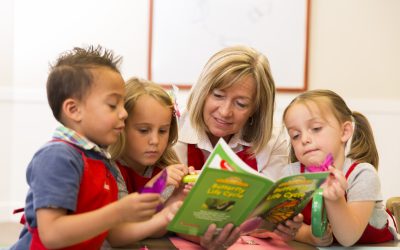
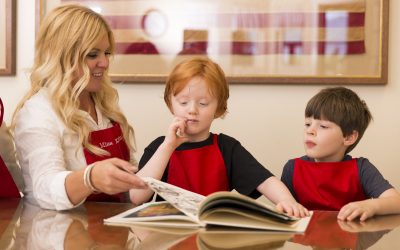
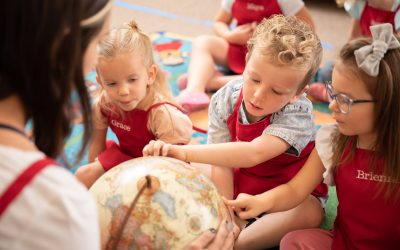
These values include mindsets such as hard work, team work, honesty, and gratitude. Every class has these values incorporated in some way: reading books together, having conversations about the value, role playing, games, and more.
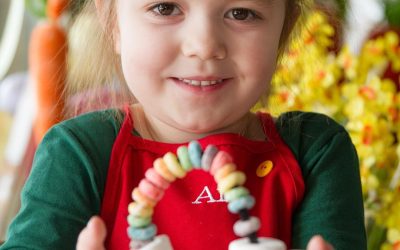
September’s monthly values are Friendship and Self-Control. You’ll see your child come home with a bracelet signifying they passed off these skills in class.
But the conversation about these values shouldn’t stop there!
Here are some ways you can incorporate the value of friendship at home:
Teaching Friendship in Children
Friendship is one of the most important skills your child will learn in their lifetime. Not only does connecting with others impact your child’s social confidence, but it will also affect their professional relationships, and will forever contribute to their happiness and fulfillment in life.
While some children may be naturally friendly and comfortable in social situations, every child can benefit from learning important friendship skills. You can help reinforce these in your home with some of the following ideas:
1 – Reinforce Friendship in your Play
While many children have different learning styles (visual, auditory, or by doing), almost every child first learns how to interact in social situations through observation and by experimenting in their own life.
When you play with your child, be conscious of how you can give them examples of friendship.
- Say “Thank you so much for sharing – you are such a good friend,” when they let you have a turn with one of their toys.
- Make sure you (or a stuffed animal, doll, etc.) are using polite words like “please” and “thank you.”
- Demonstrate conversational skills by acting compassionately during conversations with your child.
Your child is likely still too young to understand that conversation includes both parties asking questions and participating. You can introduce the concept the next time you play with your child by using a stuffed animal or doll to ask you questions and participate in the conversation.
2 – Be the Type of Listener you Want Your Child to Be
Your child will learn to treat others by the way you and your other family members treat them. Are you listening to and making eye contact with your child when he or she speaks? Are you genuinely interested in what they have to say?
Remember that you are one of the people who matters most in your child’s life. How you speak with your child now is how they learn will learn to interact with those they care about for the rest of their lives.
3 – Help Your Child Put Words (Instead of Actions) to Their Feelings
During any relationship there is going to be occasional conflict. Teaching your child to use their words to work through misunderstandings instead of acting out their emotions is an important social skill.
You can practice this in your interactions with your child by helping them put words to their feelings. For instance, if you see your child lashing out at a sibling or friend (or even doing something like throwing a toy), instead of reacting with “Don’t do that!” pull them aside and say, “You seem angry” or “You seem frustrated.”
After you help them find a word for their emotion, let them use their words to talk through it. Let them know that if they use their words to tell you how they’re feeling, you can try to help them find a solution (or that sometimes just talking about it will help them feel better).
“At our house, if someone is ‘reacting’ or acting out their emotions, we’ll sing the Daniel Tiger song ‘Use your wo-o-o-ords and say how you feel.’ For some reason having it in song is a good reminder when tensions are high and seems to set a stage where we can start talking about our feelings instead of acting them out.”
4 – Help Increase their Observational Skills
Children learn a lot about how to act socially by observing those around them. The next time you are out and about with your child, point out the good things you see other children doing.
“Wow, that was so nice of Nikki to share her toy with Alexis. What a good friend.”
“Did you see how Nick was upset that Leo took his toy and he used his words to ask for it back instead of grabbing it away? That was such a good way for him to use his words to tell how he was feeling.”
“I sure thought it was sweet that Ashley was so nice to ask how your dance concert went last night. What a good friend she was to remember you had your important concert and ask you about it.”
5 – Give Them Plenty of Opportunities to Interact with Other Children
A child can only learn so much about friendship without putting those skills into action. Allow your child to participate in situations where their kind (or not so kind) actions generate immediate reactions from other children. This will help your child learn in a high-feedback way what works and what doesn’t work in social settings.
Take trips to the park, schedule play groups, enroll your child in extracurricular activities, attend family events, etc.
6 – Praise Instead of Criticize
When children are young, it’s difficult not to jump in and correct their social actions.
“Jaxon, you need to share with Riley,” or “Casey, it’s time to give Ashley a turn on the swing,” or even, “Declan, if you don’t stop talking meanly to Caleb then we’re going home right now.”
It’s natural for caretakers to react in a negative situation by trying to use it as a teaching opportunity or to try to solve an immediate problem, but in the case of friendship this is not the most effective way to teach children what they should and shouldn’t do.
Being a friend can sometimes be difficult and sometimes means making sacrifices or putting someone before yourself. This isn’t something that can be forced or contrived. For instance, when you tell your child they have to share in a situation in which they don’t want to, it inadvertently reinforces to your child that sharing is not fun, is difficult, and is something they do not want to do. This will make them less likely to share on their own.
If you praise your child when you see them being a good friend on their own, they’ll be more likely to replicate that action in the future since they have the good feeling of sharing reinforced by the pride that they did something well.
7 – What Type of Example are You Setting?
As always, you are your child’s greatest role model. We all know that our children watch and replicate everything we do, and the way we treat our friends and neighbors is no different.
Make sure your child sees you taking an active role in your friendships. Let your child see you writing your friend a birthday card or giving them a call to check in if they are sick. Involve them in a conversation when you go shopping and see something that reminds you of a friend or family member. “This little birdhouse is adorable. My friend Alexis loves to collect birdhouses for her backyard. I wonder if this would make a thoughtful gift for her birthday next month.”
How do you reinforce friendship in your house?
Reinforcing the skills of friendship in your home is one of the most powerful ways you can impact your child’s happiness and success long-term. Social skills and confidence are important not only for developing friends in childhood but also for achieving confidence, success, and happy relationships in the future.
We love this list by Delightful Children’s Books that lists 25 books on friendship for children.
How do you reinforce the value of being a good friend in your home? Share your ideas by commenting below.